Tuesday, May 31, 2022

Book Chapter

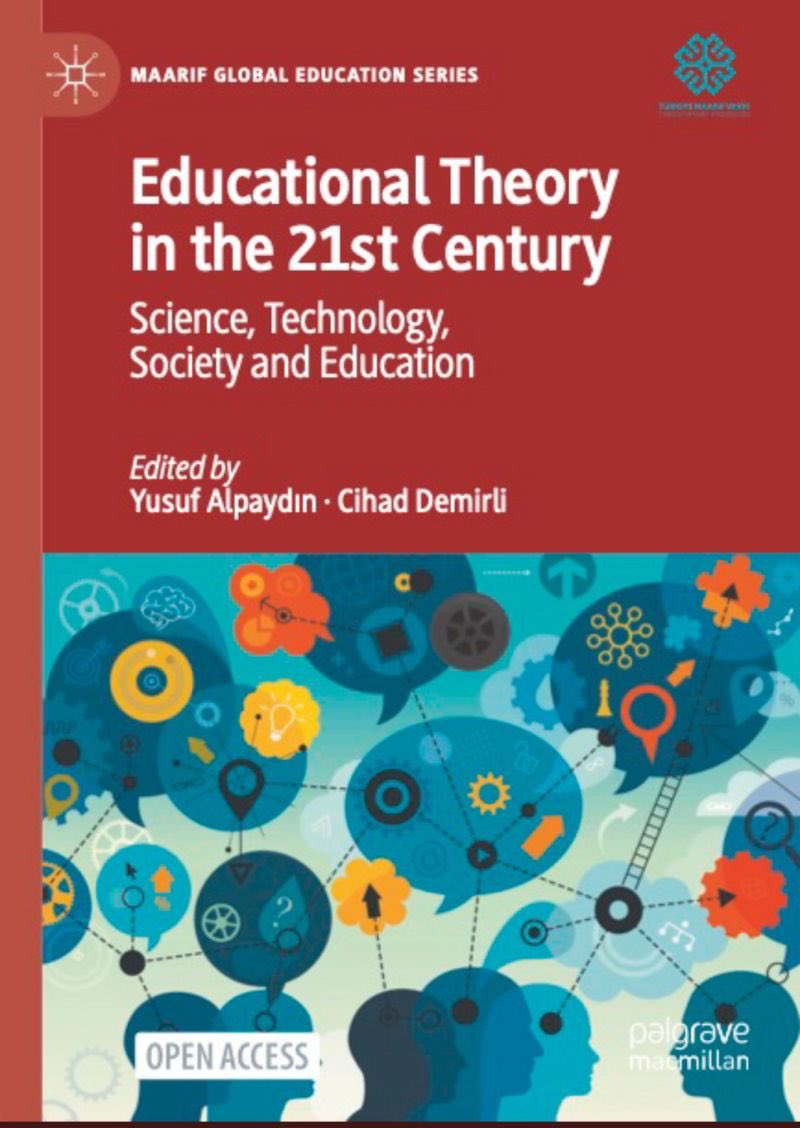
Revisiting Effective Instructional Strategies for Twenty-First-Century Learners

Asil Ali Özdoğru

Rapid changes in the society and technology of the twenty-first century world have brought unique challenges for humanity. This chapter summarizes some of the strategies and support systems for effective learning and teaching in the twenty-first century in addressing some of these challenges. Learning is a dynamic process that is supported by the mechanisms of memory and reasoning as well as an individual’s mindset, habits, goals, and motivation. Theories and research imply that learning is not only a cognitive process but also a social-emotional process that takes place environmentally and culturally across one’s lifespan. Strategies to foster effective learning and teaching should pursue developing a process that is more active, authentic, collaborative, creative, interactive, personalized, relational, and self-regulative. Effective instruction is centered on the learner and knowledge, promotes conceptual understanding and metacognition, and utilizes assessment and technology in alignment with the instructional objectives. Productive instructional strategies used in a caring and supportive environment embedded in service and support systems foster learners’ cognitive, social, and emotional development.

Keywords: Twenty-first-century skills, Instructional strategies, Educational implications

Citation: Özdoğru, A. A. (2022). Revisiting effective instructional strategies for twenty-first-century learners. In Y. Alpaydın & C. Demirli (Eds.), Educational theory in the 21st century: Science, technology, society and education (pp. 175-195). Palgrave Macmillan. https://doi.org/10.1007/978-981-16-9640-4_8

Friday, May 27, 2022

Research Article

A Global Experiment on Motivating Social Distancing During the COVID-19 Pandemic

Psychological Science Accelerator Self-Determination Theory Collaboration

Finding communication strategies that effectively motivate social distancing continues to be a global public health priority during the COVID-19 pandemic. This cross-country, preregistered experiment (n = 25,718 from 89 countries) tested hypotheses concerning generalizable positive and negative outcomes of social distancing messages that promoted personal agency and reflective choices (i.e., an autonomy-supportive message) or were restrictive and shaming (i.e., a controlling message) compared with no message at all. Results partially supported experimental hypotheses in that the controlling message increased controlled motivation (a poorly internalized form of motivation relying on shame, guilt, and fear of social consequences) relative to no message. On the other hand, the autonomy-supportive message lowered feelings of defiance compared with the controlling message, but the controlling message did not differ from receiving no message at all. Unexpectedly, messages did not influence autonomous motivation (a highly internalized form of motivation relying on one’s core values) or behavioral intentions. Results supported hypothesized associations between people’s existing autonomous and controlled motivations and self-reported behavioral intentions to engage in social distancing. Controlled motivation was associated with more defiance and less long-term behavioral intention to engage in social distancing, whereas autonomous motivation was associated with less defiance and more short- and long-term intentions to social distance. Overall, this work highlights the potential harm of using shaming and pressuring language in public health communication, with implications for the current and future global health challenges.

Citation: Psychological Science Accelerator Self-Determination Theory Collaboration. (2022). A global experiment on motivating social distancing during the COVID-19 pandemic. Proceedings of the National Academy of Sciences, 119(22), e2111091119. https://doi.org/10.1073/pnas.2111091119

Media: Is controlling communication effective during public health crises? (2022, May 27). Durham Universityhttps://www.durham.ac.uk/news-events/latest-news/2022/05/is-controlling-communication-effective-during-public-health-crises/

Thursday, April 14, 2022

Research Article

Situational Factors Shape Moral Judgements in the Trolley Dilemma in Eastern, Southern and Western Countries in a Culturally Diverse Sample

Bence Bago, Marton Kovacs, John Protzko, Tamas Nagy, Zoltan Kekecs, Bence Palfi, Matus Adamkovic, Sylwia Adamus, Sumaya Albalooshi, Nihan Albayrak-Aydemir, Ilham N. Alfian, Sinan Alper, Sara Alvarez-Solas, Sara G. Alves, Santiago Amaya, Pia K. Andresen, Gulnaz Anjum, Daniel Ansari, Patrícia Arriaga, John Jamir Benzon R. Aruta, Alexios Arvanitis, Peter Babincak, Krystian Barzykowski, Bana Bashour, Ernest Baskin, Luisa Batalha, Carlota Batres, Jozef Bavolar, Fatih Bayrak, Benjamin Becker, Maja Becker, Anabel Belaus, Michał Białek, Ennio Bilancini, Daniel Boller, Leonardo Boncinelli, Jordane Boudesseul, Benjamin T. Brown, Erin M. Buchanan, Muhammad M. Butt, Dustin P. Calvillo, Nate C. Carnes, Jared B. Celniker, Christopher R. Chartier, William J. Chopik, Poom Chotikavan, Hu Chuan-Peng, Rockwell F. Clancy, Ogeday Çoker, Rita C. Correia, Vera Cubela Adoric, Carmelo P. Cubillas, Stefan Czoschke, Yalda Daryani, Job A. M. de Grefte, Wieteke C. de Vries, Elif G. Demirag Burak, Carina Dias, Barnaby J. W. Dixson, Xinkai Du, Francesca Dumančić, Andrei Dumbravă, Natalia B. Dutra, Janina Enachescu, Celia Esteban-Serna, Luis Eudave, Thomas R. Evans, Gilad Feldman, Fatima M. Felisberti, Susann Fiedler, Andrej Findor, Alexandra Fleischmann, Francesco Foroni, Radka Francová, Darius-Aurel Frank, Cynthia H. Y. Fu, Shan Gao, Omid Ghasemi, Ali-Reza Ghazi-Noori, Maliki E. Ghossainy, Isabella Giammusso, Tripat Gill, Biljana Gjoneska, Mario Gollwitzer, Aurélien Graton, Maurice Grinberg, Agata Groyecka-Bernard, Elizabeth A. Harris, Andree Hartanto, Widad A. N. M. Hassan, Javad Hatami, Katrina R. Heimark, Jasper J. J. Hidding, Evgeniya Hristova, Matej Hruška, Charlotte A. Hudson, Richard Huskey, Ayumi Ikeda, Yoel Inbar, Gordon P. D. Ingram, Ozan Isler, Chris Isloi, Aishwarya Iyer, Bastian Jaeger, Steve M. J. Janssen, William Jiménez-Leal, Biljana Jokić, Pavol Kačmár, Veselina Kadreva, Gwenaël Kaminski, Farzan Karimi-Malekabadi, Arno T. A. Kasper, Keith M. Kendrick, Bradley J. Kennedy, Halil E. Kocalar, Rabia I. Kodapanakkal, Marta Kowal, Elliott Kruse, Lenka Kučerová, Anton Kühberger, Anna O. Kuzminska, Fanny Lalot, Claus Lamm, Joris Lammers, Elke B. Lange, Anthony Lantian, Ivy Y.-M. Lau, Ljiljana B. Lazarevic, Marijke C. Leliveld, Jennifer N. Lenz, Carmel A. Levitan, Savannah C. Lewis, Manyu Li, Yansong Li, Haozheng Li, Tiago J. S. Lima, Samuel Lins, Marco Tullio Liuzza, Paula Lopes, Jackson G. Lu, Trent Lynds, Martin Máčel, Sean P. Mackinnon, Madhavilatha Maganti, Zoe Magraw-Mickelson, Leon F. Magson, Harry Manley, Gabriela M. Marcu, Darja Masli Seršić, Celine-Justine Matibag, Alan D. A. Mattiassi, Mahdi Mazidi, Joseph P. McFall, Neil McLatchie, Michael C. Mensink, Lena Miketta, Taciano L. Milfont, Alberto Mirisola, Michal Misiak, Panagiotis Mitkidis, Mehrad Moeini-Jazani, Arash Monajem, David Moreau, Erica D. Musser, Erita Narhetali, Danielle P. Ochoa, Jerome Olsen, Nicholas C. Owsley, Asil A. Özdoğru, Miriam Panning, Marietta Papadatou-Pastou, Neha Parashar, Philip Pärnamets, Mariola Paruzel-Czachura, Michal Parzuchowski, Julia V. Paterlini, Jeffrey M. Pavlacic, Mehmet Peker, Kim Peters, Liudmila Piatnitckaia, Isabel Pinto, Monica Renee Policarpio, Nada Pop-Jordanova, Annas J. Pratama, Maximilian A. Primbs, Ekaterina Pronizius, Danka Purić, Elisa Puvia, Vahid Qamari, Kun Qian, Alain Quiamzade, Beáta Ráczová, Diego A. Reinero, Ulf-Dietrich Reips, Cecilia Reyna, Kimberly Reynolds, Matheus F. F. Ribeiro, Jan P. Röer, Robert M. Ross, Petros Roussos, Fernando Ruiz-Dodobara, Susana Ruiz-Fernandez, Bastiaan T. Rutjens, Katarzyna Rybus, Adil Samekin, Anabela C. Santos, Nicolas Say, Christoph Schild, Kathleen Schmidt, Karolina A. Ścigała, MohammadHasan Sharifian, Jiaxin Shi, Yaoxi Shi, Erin Sievers, Miroslav Sirota, Michael Slipenkyj, Çağlar Solak, Agnieszka Sorokowska, Piotr Sorokowski, Sinem Söylemez, Niklas K. Steffens, Ian D. Stephen, Anni Sternisko, Laura Stevens-Wilson, Suzanne L. K. Stewart, Stefan Stieger, Daniel Storage, Justine Strube, Kyle J. Susa, Raluca D. Szekely-Copîndean, Natalia M. Szostak, Bagus Takwin, Srinivasan Tatachari, Andrew G. Thomas, Kevin E. Tiede, Lucas E. Tiong, Mirjana Tonković, Bastien Trémolière, Lauren V. Tunstead, Belgüzar N. Türkan, Mathias Twardawski, Miguel A. Vadillo, Zahir Vally, Leigh Ann Vaughn, Bruno Verschuere, Denis Vlašiček, Martin Voracek, Marek A. Vranka, Shuzhen Wang, Skye-Loren West, Stephen Whyte, Leigh S. Wilton, Anna Wlodarczyk, Xue Wu, Fei Xin, Su Yadanar, Hiroshi Yama, Yuki Yamada, Onurcan Yilmaz, Sangsuk Yoon, Danielle M. Young, Ilya Zakharov, Rizqy A. Zein, Ingo Zettler, Iris L. Žeželj, Don C. Zhang, Jin Zhang, Xiaoxiao Zheng, Rink Hoekstra, and Balazs Aczel

The study of moral judgements often centres on moral dilemmas in which options consistent with deontological perspectives (that is, emphasizing rules, individual rights and duties) are in conflict with options consistent with utilitarian judgements (that is, following the greater good based on consequences). Greene et al. (2009) showed that psychological and situational factors (for example, the intent of the agent or the presence of physical contact between the agent and the victim) can play an important role in moral dilemma judgements (for example, the trolley problem). Our knowledge is limited concerning both the universality of these effects outside the United States and the impact of culture on the situational and psychological factors affecting moral judgements. Thus, we empirically tested the universality of the effects of intent and personal force on moral dilemma judgements by replicating the experiments of Greene et al. in 45 countries from all inhabited continents. We found that personal force and its interaction with intention exert influence on moral judgements in the US and Western cultural clusters, replicating and expanding the original findings. Moreover, the personal force effect was present in all cultural clusters, suggesting it is culturally universal. The evidence for the cultural universality of the interaction effect was inconclusive in the Eastern and Southern cultural clusters (depending on exclusion criteria). We found no strong association between collectivism/individualism and moral dilemma judgements.
Citation: Bago, B., Kovacs, M., Protzko, J., Nagy, T., Kekecs, Z., Palfi, B., Adamkovic, M., Adamus, S., Albalooshi, S., Albayrak-Aydemir, N., Alfian, I. N., Alper, S., Alvarez-Solas, S., Alves, S. G., Amaya, S., Andresen, P. K., Anjum, G., Ansari, D., Arriaga, P., . . . Aczel, B. (2022). Situational factors shape moral judgements in the trolley dilemma in Eastern, Southern and Western countries in a culturally diverse sample. Nature Human Behavior6, 880-895. https://doi.org/10.1038/s41562-022-01319-5

Media: Bago, B. (2022, May 24). How universal is our morality? Many aspects of our morality are culturally universal. Psychology Todayhttps://www.psychologytoday.com/ca/blog/feast-reasoning/202205/how-universal-is-our-morality

Friday, March 18, 2022

Kongre Bildiri

Uluslararası Uzamış Yas Bozukluğu Ölçeği Türkçe Formunun Güvenirlik ve Geçerlik Çalışması

Asil Ali Özdoğru ve Beyzanur Yalçın

Yas, sevilen bir kişinin ölümü ya da değer verilen nesne, hedef veya ilişkinin yitirilmesi gibi olaylarda gelişen kayıp algısına karşı verilen bedensel, psikolojik ve sosyal tepkilerdir. Bu tepkiler normal olmakla beraber altı aydan uzun süren ve işlev kaybına yol açan şiddetli deneyimler uzamış yas bozukluğu olarak değerlendirilmektedir. Uluslararası Uzamış Yas Bozukluğu Ölçeği (UUYBÖ), Dünya Sağlık Örgütünün Uluslararası Hastalık Sınıflandırma Sistemi ICD-11’e göre geliştirilmiş bireysel farklılıkların yanı sıra kültürel özellikleri de dikkate alan bir ölçüm aracıdır. Bu çalışmada UUYBÖ’nün Türkçe uyarlamasının yapılarak güvenirlik ve geçerlik analizlerinin yapılması hedeflenmiştir. UUYBÖ, 13 ana madde, bir kültürel madde, bir süre maddesi ve 20 ek maddeden oluşan beşli Likert tipi bir özbildirim ölçeğidir. İngilizce aslından Türkçe’ye çeviri ve geri çeviri yöntemiyle uyarlanan ölçek, çoğunluğu üniversite öğrencisi ve yüzde 83’ü kadın toplam 354 yetişkin katılımcıya uygulanmıştır. Yaşları 18 ila 53 arasında değişen katılımcıların yaş ortalaması 24,37’dir (SS=6,04). Katılımcılara UUYBÖ’nün yanı sıra Uzamış Yas Ölçeği (UYÖ-13), Hasta Sağlık Anketi (HSA-9) ve Yaygın Anksiyete Bozukluğu Testi (YAB-7) uygulanmıştır. Yapılan analizlerde UUYBÖ’nün özdeğeri 5,81 olan ve toplam varyansın %45’ini açıklayan bir faktöre sahip olduğu görülmüştür. UUYBÖ yas şiddeti genel puanı ile UYÖ-13, HSA-9 ve YAB-7 ölçek puanları arasında istatistiksel olarak anlamlı ,455 ila ,834 arasında değişen pozitif korelasyonlar elde edilmiştir. UUYBÖ’nin Cronbach Alfa katsayısı da ,890 olarak hesaplanmıştır. Elde edilen bulgulara göre UUYBÖ, orijinal ölçekte olduğu gibi tek faktörlü bir yapıya sahip, ölçüt geçerliği bulunan ve yüksek güvenirlik seviyesine sahip bir ölçek olarak değerlendirilebilir. UUYBÖ Türk yetişkinlerin uzamış yas tepkilerini uluslararası ölçütlere göre değerlendirmede yeterli psikometrik özelliklere sahip bir ölçüm aracı olarak araştırmacı ve uygulamacılar tarafından kullanılabilir.

Atıf: Özdoğru, A. A. ve Yalçın, B. (2022, Mart 18-19). Uluslararası Uzamış Yas Bozukluğu Ölçeği Türkçe formunun güvenirlik ve geçerlik çalışması [Sözlü bildiri sunumu]. 4. Uluslararası Pozitif Psikoloji Kongresi, İstanbul, Türkiye. https://ppcongress.com/

Friday, December 31, 2021

Araştırma Makalesi

Öğretmenlerin Çokkültürlü Eğitime ve Mülteci Öğrencilere Yönelik Tutumları

Asil Ali Özdoğru, Fatma Nur Dolu, Aysenur Akan ve Sena Aldemir

Bu araştırmanın amacı öğretmenlerin sosyodemografik özellikleri ve çokkültürlü eğitim tutumları ile mülteci öğrencilere karşı tutumları arasındaki ilişkiyi incelemektir. Araştırmanın çalışma grubunu amaçlı örnekleme yöntemiyle ulaşılan 134 öğretmen oluşturmaktadır. 55’i kadın ve 79’u erkek olan katılımcıların yaşları 23 ila 62 (Ort.=38,70; ss=7,97) arasında değişmektedir. Katılımcılara sosyodemografik sorularla birlikte Öğretmenlerin Çokkültürlü Eğitim Tutum Ölçeği (ÖÇTÖ) ve Mülteci Öğrenci Tutum Ölçeği (MÖTÖ) çevrimiçi olarak uygulanmıştır. Korelasyon analizi sonucunda ÖÇTÖ ve MÖTÖ toplam, MÖTÖ iletişim ve yeterlik alt boyut puanları arasında istatistiksel olarak anlamlı pozitif bir ilişki saptanmıştır. Ölçek puanlarının cinsiyet, yurt dışına çıkma, çokkültürlü deneyime sahip olma, geçmişte mülteci öğrencilerle çalışmış olma, şimdi mülteci öğrencilerle çalışıyor olma ve mülteci öğrencilerle ilgili mesleki gelişim eğitimine katılma durumlarına göre anlamlı farklılık göstermediği bulunmuştur. Öğretmenlerin ÖÇTÖ puanlarının yaşlarıyla ve yaşamlarının çoğunu geçirdikleri yerleşim türüyle ilişkili olduğu bulunmuştur. Öğretmenlerin MÖTÖ puanlarının ise yaş, kıdem, yaşamlarının çoğunu geçirdikleri yerleşim türü ve görev yapılan eğitim kademesiyle ilişkili olduğu görülmüştür.

Anahtar Kelimeler: Mülteci öğrenciler, öğretmen tutumları, çokkültürlü eğitim

Atıf: Özdoğru, A. A., Dolu, F. N., Akan, A. ve Aldemir, S. (2021). Öğretmenlerin çokkültürlü eğitime ve mülteci öğrencilere yönelik tutumları. Dicle Üniversitesi Ziya Gökalp Eğitim Fakültesi Dergisi, 40, 111-122. https://doi.org/10.14582/DUZGEF.2021.181


Teachers’ Attitudes Towards Multicultural Education and Refugee Students

Asil Ali Özdoğru, Fatma Nur Dolu, Aysenur Akan, and Sena Aldemir

The aim of this study is to examine the relationship between teachers' sociodemographic characteristics and their attitudes towards multicultural education and refugee students. Participants consisted of 134 teachers who were recruited through purposive sampling. Ages of the participants ranged from 23 to 62 (M=38,70; sd=7,97), of which 55 were female and 79 were male. Along with sociodemographic questions, Teacher Multicultural Attitude Survey (TMAS) and Refugee Student Attitude Scale (RSAS) were administered online. Correlation analysis revealed a statistically significant correlation between TMAS and RSAS total scores. There was a statistically significant positive correlation between TMAS total scores and RSAS communication subscale scores and RSAS competency subscale scores. The scale scores did not differ significantly for the variables of gender, going abroad, having a multicultural experience, having refugee students in the past, having refugee students currently and participating in any professional education related to refugee students. The teachers’ TMAS scores were found to differ significantly according to their ages and the type of settlement where they have spent most of their lives. It was found that teachers’ RSAS scores correlated with their age, professional experience, settlement type, and school levels they work.

Keywords: Refugee students, teacher attitudes, multicultural education

Citation: Özdoğru, A. A., Dolu, F. N., Akan, A., & Aldemir, S. (2021). Teachers’ attitudes towards multicultural education and refugee students [Abstract]. Dicle University Journal of Ziya Gökalp Faculty of Education, 40, 111-122. https://doi.org/10.14582/DUZGEF.2021.181

Friday, December 3, 2021

Research Article

Social Contact, Academic Satisfaction, COVID-19 Knowledge, and Subjective Well-being Among Students at Turkish Universities: A Nine-University Sample

Gülsen Erden, Asil Ali Özdoğru, Sami Çoksan, Hale Ögel-Balaban, Yakup Azak, İlkiz Altınoğlu-Dikmeer, Aysun Ergül-Topçu, Yeşim Yasak, Gözde Kıral-Uçar, Seda Oktay, Pelin Karaca-Dinç, Ezgi Didem Merdan-Yıldız, Selen Eltan, Güler Beril Kumpasoğlu, and Gülsen Baytemir

Adverse effects of COVID-19 are seen not only on the physical health of infected individuals but also on their subjective well-being. Sudden changes in social lives, lockdowns, and shifts towards online education have had a negative impact on many people, especially university students. As part of an international study, the current study focused on the well-being of students at Turkish universities in relation to social contact, academic satisfaction, and COVID-19 knowledge. A total of 7363 students from nine universities (86.6% from state universities, 71.04% female, and 73.52% at bachelor’s level) participated in an online survey. Results revealed that females had lower levels of subjective well-being and academic satisfaction. According to a mediation model in the study, the relationship between social contact and well-being was mediated by academic satisfaction and COVID-19 knowledge. Our findings can guide future researchers, mental health professionals, universities, and policymakers to understand and improve subjective well-being of university students.

Keywords: Subjective well-being, Social contact, Academic satisfaction, COVID-19, University students

Citation: Erden, G., Özdoğru, A. A., Çoksan, S., Ögel-Balaban, H., Azak, Y., Altınoğlu-Dikmeer, İ., Ergül-Topçu, A., Yasak, Y., Kıral-Uçar, G., Oktay, S., Karaca-Dinç, P., Merdan-Yıldız, E. D., Eltan, S., Kumpasoğlu, G. B., & Baytemir, G. (2021). Social contact, academic satisfaction, COVID-19 knowledge, and subjective well-being among students at Turkish universities: A nine-university sample. Applied Research in Quality of Life. Advance online publication. https://doi.org/10.1007/s11482-021-10019-7

Friday, October 1, 2021

Research Article

Depressive Symptoms in Higher Education Students During the First Wave of the COVID-19 Pandemic. An Examination of the Association With Various Social Risk Factors Across Multiple High- and Middle-Income Countries

S. Van de Velde, V. Buffel, C. van der Heijde, S. Çoksan, P. Bracke, T. Abel, H. Busse, H. Zeeb, F. Rabiee-Khan, T. Stathopoulou, G. Van Hal, J. Ladner, M. Tavolacci, R. Tholen, E. Wouters, and for the C19 ISWS Consortium

Higher-education students face substantial risks for developing depressive symptoms during the COVID-19 pandemic or experiencing exacerbated pre-existing depressive symptoms. This study uses data from the COVID-19 International Student Well-Being Study, which collected data through a non-representative convenience sample in 125 higher-education institutions (HEI) across 26 high- and middle-income countries (N: 20,103) during the first wave of the COVID-19 pandemic. It describes the prevalence of depressive symptoms in higher-education students. We find substantial cross-national variation in depressive symptoms, with lowest mean levels established in the Nordic countries and France, while highest mean levels of depressive symptoms were found in Turkey, South Africa, Spain and the USA. Elevated risk for depressive symptoms was found in female students, students with fewer social support resources and in a more disadvantaged socioeconomic position, and students with a migrant background. COVID-19 related stressors, such as reduced social contact, increased financial insecurity, and academic stress explained a relatively larger proportion of the variance in depressive symptoms compared to non-COVID-19 related stressors. This finding shows that not the pandemic itself, but rather the secondary effects of the pandemic relate to students' mental health. Our results enable HEIs to be better equipped to target groups that are particularly at risk during a pandemic.

Keywords: Depressive symptoms, Higher education students, COVID-19

Citation: Van de Velde, S., Buffel, V., van der Heijde, C., Çoksan, S., Bracke, P., Abel, T., Busse, H., Zeeb, H., Rabiee-khan, F., Stathopoulou, T., Van Hal, G., Ladner, J., Tavolacci, M., Tholen, R., Wouters, E., & for the C19 ISWS Consortium (2021). Depressive symptoms in higher education students during the first wave of the COVID-19 pandemic. An examination of the association with various social risk factors across multiple high- and middle-income countries. SSM - Population Health, 16, 100936. https://doi.org/10.1016/j.ssmph.2021.100936